19 January 2010

Jan 19

Reference links:
Old Testament

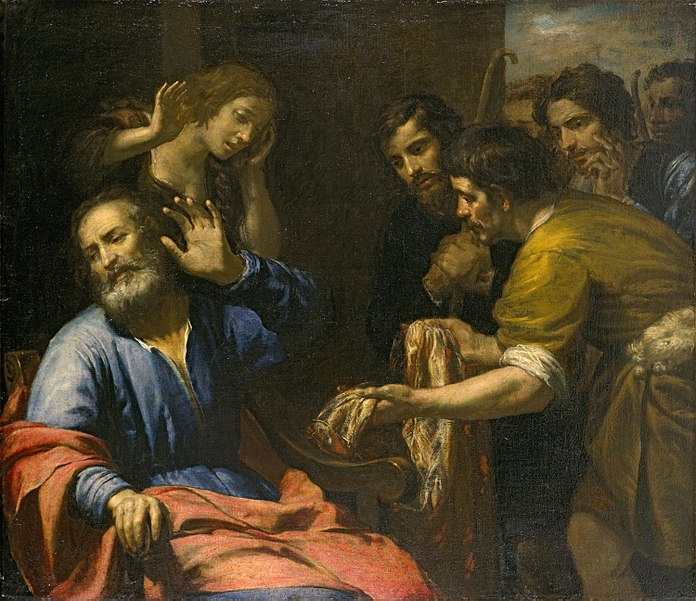
In yesterday's reading, slave traders sold Joseph to Potiphar, the captain of the guard for Pharaoh. Because God is with Joseph, Joseph prospers in all that he does. Potiphar eventually gives him administrative control of the household. But the good life does not last. Joseph, "a very handsome and well-built young man," attracted the interest of Potiphar's wife . She tried to get him to sleep with her. He refused, so eventually she told her husband that Joseph had slept with her so that Joseph would be thrown in prison. Soap opera! (As a side note, it was impossible to find a "licensed for reuse" image where Joseph was actually handsome.  Pity.)

Even in prison, Joseph prospers. The warden soon puts him in charge of the other prisoners and the day-to-day activities of the prison. Now, God may or may not have been with Joseph, but I think we can conclude that he was certainly a good manager and probably rather charismatic.

Eventually Joseph meets two of Pharaoh's servants. These servants were put in the palace of the captain guard (remember, that's Potiphar). According to the text,
They remained in prison for quite some time, and the captain of the guard assigned them to Joseph, who looked after them.
This makes it sound like it was Potiphar who was giving Joseph responsibility. This seems weird given that he was the one who threw Joseph in prison. Maybe he really did like Joseph but did not want to anger his wife by freeing him from prison. Or maybe the text is just confused. This does not seem unlikely since in this part of the text the captain of the guard is always referred to by title and not by name.


In any case, Joseph correctly interprets dreams for the two prisoners. Pharaoh executes one prisoner and returns the other to his job as cup-bearer. Two years later, Pharaoh starts having weird dreams. None of his magicians or wise men can tell him what they mean. Now, I am no expert in ancient Egyptian magicians and wise men, but I do know that in modern America, plenty of people would be willing to make up interpretations for dreams and one of them would make a guess good enough to convince Pharaoh. This is especially true when you consider that Pharaoh's dreams were not that opaque: 7 healthy cows were eaten by 7 sickly cows and 7 full grain stalks were eaten by 7 scrawny ones (click through to the full sized pictures; it has cows eating each other).

In any case, the cup-bearer remembers Joseph, and Pharaoh calls Joseph into his presence. Will Joseph interpret Pharaoh's dreams? We will have to wait until tomorrow to see.

New Testament

Today Jesus took advantage of a visit from his mother and brothers to claim that his true mothers and brothers are those who follow the will of his Father in heaven. It is not reported whether or not Jesus subsequently went out to speak with his biological mother and brothers. If you assumed he did not, then there are some good opportunities for fan fic. Had he had a falling out with them? Was he accusing them of not following God or his religion? Did they think he was crazy? Were they trying to get him to come home again? Such possibilities!


Today we hear the parable of the farmer and the seeds. A farmer throws out some seed.. Some landed on the footpath and were eaten by birds. Some sprouted in shallow soil and wilted quickly. Some fell among thorns and were crowded out. Some fell and fertile soil and were productive. These stand for, respectively, those who heard Jesus and did not understand, those who listen but soon fall away, those who listen but whose beliefs are crowded out by life, and, finally, those who "truly hear and understand God's word". A parable should not be interpreted too literally, but I do think that this parable can yield an interesting interpretation.

In particular, the location that received the seed had no choice in its nature and no ability to change. Dirt cannot make itself fertile. A foot path cannot choose to become a field. A weedy area cannot will the weeds away. If we take this to be part of the lesson Jesus is trying to teach, this supports a predestination style interpretation of salvations. That is to say, those who are saved have no choice in that matter. The ability to believe and persist in belief is part of one's nature as shaped by God.

Today we read another passage in the arsenal of those who argue that non-believers are unqualified to read and understand the Bible.
To those who listen to my teaching, more understanding will be given, and they will have an abundance of knowledge. But for those who are not listening, even what little understanding they have will be taken away from them. That is why I use these parables,

For they look, but they don't really see.
They hear, but they don't really listen or understand.
This passage is often interpreted to mean that faith must proceed understanding. But God would be silly to make revelation of his existence and of his son's divinity work this way. Presumably, a God who created humanity would understand human psychology. A God who understood human psychology would realize that humans are subject to confirmation bias: they interpret their experiences to support their existing beliefs. Therefore, any belief system that requires belief before it can be understood will inevitably keep company with the countless false belief systems that have persisted despite their obvious incorrectness.

More supposed fulfilled prophecies. Jesus claims that the bit above about looking and not really seeing fulfilles a prophecy from Isaiah 6:9-10. First, let's look at the quoted passage.
‘When you hear what I say,
you will not understand.
When you see what I do,
you will not comprehend.
For the hearts of these people are hardened,
and their ears cannot hear,
and they have closed their eyes—
so their eyes cannot see,
and their ears cannot hear,
and their hearts cannot understand,
and they cannot turn to me
and let me heal them.

The author of Matthew is quoting from the Greek version. Not unreasonable perhaps, but interesting given that the passage reads rather differently in a translation from the Hebrew, quoted below with verse 8 added for context
Then I heard the Lord asking, “Whom should I send as a messenger to this people? Who will go for us?”

I said, “Here I am. Send me.”

And he said, “Yes, go, and say to this people,

‘Listen carefully, but do not understand.
Watch closely, but learn nothing.’
Harden the hearts of these people.
Plug their ears and shut their eyes.
That way, they will not see with their eyes,
nor hear with their ears,
nor understand with their hearts
and turn to me for healing.”
Two things to notice: First, as I mentioned above, the translation from Hebrew reads very differently from the translation from Greek. Now, I would not be surprised if a regular human authoring a book made this sort of mistake. However, I am rather surprised to see such a mistake in a work that is supposed to be divinely inspired. You would think divine inspiration would include being able to see where existing translations were inaccurate. Second, this passage is about the prophet Isaiah and what he has been instructed to do. It is not a prophecy about some future messiah. To apply it to Jesus stretches my credulity.

Psalms and Proverbs

Nothing of particular note today.

18 January 2010

Jan 18

Reference links:
Old Testament

Jacob favors Joseph "because Joseph had been born to him in his old age." This made Joseph's brother's jealous. I wonder if Jacob also favored Benjamin since Benjamin was born to Jacob after Joseph was born.

The brothers' anger increases when Joseph starts having strange dreams. In the first dream, he sees them bundling grain together. His bundle stands up while his brothers' bundles bow. He then dreams that the sun, moon, and eleven stars bow down before him (I would imagine they bob more than bow). The implication is that Joseph, the second youngest of twelve sons, will somehow gain power over his brothers. They dislike the idea, not surprisingly.

One day, Joseph's brothers are pasturing sheep. Jacob sends Joseph to report on the flocks. When Joseph's brothers see him coming, they plot to kill him. Reuben, the oldest, convinces them to just throw Joseph in a cistern and let him die naturally (but Reuben really planned to come back and rescue Joseph). Joseph's brothers execute this plan, but then take advantage of a passing caravan of traders and sell Joseph into slavery. The traders eventually sell Joseph to Potiphar, an officer of the Pharaoh. The brothers dip Joseph's robe in blood and presented it to their father. Jacob then mourns deeply for his favorite son.

We then take a brief break from that story to read about Judah and Tamar. Judah was the fourth son of Jacob and Leah. Bad luck plagues him. He married a Canaanite woman and had three sons with her. The oldest son, Er, marries Tamar. But the Lord considered Er to be wicked and killed him. Judah then forced his second son, Onan, to marry Tamar and produce an heir for Er (tee hee, "heir for Er"). Onan thought this arrangement sucked and so pulled out early whenever he had sex with Tamar (remember, it's the Bible being explicit, not me). God thought this was evil of Onan and so killed him too. I think that is rather evil of God.


Judah sent Tamar back home, promising to marry her to his third son when he is older. However, he intended to break his promise because he did not want his third son to die. Tamar eventually figured this out, and decided to take matters into her own hands. She fooled Judah into thinking she was a prostitute and got pregnant by him. When Judah finds out that Tamar was pregnant, he declared that she should be burned to death. However, she had been clever and had proof that he had slept with her. This convinced Judah that Tamar is righteous because apparently it is okay to sleep with your father-in-law if he does not arrange for you to marry his last son. In any case, she gives birth to twins and Judah never sleeps with her again.

New Testament

Jesus heals another demon possessed man and people start to wonder if he is the Messiah. The Pharisees think that Jesus gets his power to cast out demons from Satan. Jesus makes a good point when he responds
Any kingdom divided by civil war is doomed. A town or family splintered by feuding will fall apart.
Sadly, he follows this up with a terrible point.
Anyone who isn't with me opposes me, and anyone who isn't working with me is actually working against me.
So remember, if you do not explicitly support Jesus, you are his enemy. In the same line, Jesus goes on to condemn anyone who does not listen to him or who wants him to actually demonstrate evidence for his claims of being able to do miraculous claims. Jesus apparently hated skeptics.

Psalms and Proverbs
Keep me safe, Oh God,
for I have come to you for refuge.
I wonder how often that verse has been cried out by those is despair only to have their hopes crushed, their refuge refused? In any case, today's psalm presents a different message from the psalms we were considering the other day. Instead of doubt being the centerpiece, hope takes a central position. For those who actually believe the Bible, this must be a lovely song of praise.

More good moral lessons in the proverbs:
Do not withhold good from those who deserve it
when it's in your power to help them.
If you can help your neighbor now, don't say,
"Come back tomorrow, and then I'll help you."
Yesterday, I commented on Jesus' teachings about healing on the Sabbath. I claimed that Jesus did not make a very strong case for allowing it. He could have done a much better job if he had quoted the verses above. Those verses provide clear cut instructions that it is better to do good now than later.

Also, don't plot against your neighbor or pick fights or copy the ways of violent people.

17 January 2010

Jan 17

Reference links:
Old Testament

Jacob returns to Bethel. Remember when Jacob fled Esau and Jacob dreamed of God? Bethel was the place that occurred. Upon arriving at Bethel, Jacob talks with God again.
God appeared to [Jacob] again at Bethel. God blessed him, saying, "Your name is Jacob, but you will not be called Jacob any longer. From now on your name will be Israel." So God renamed him Israel.
God renamed Jacob in yesterday's reading. Why do it again?

Also confusing, it seems that Jacob names Bethel again. Jacob named it the first time when fleeing from Esau.
The next morning Jacob got up very early. He took the stone he had rested his head against, and he set it upright as a memorial pillar. Then he poured olive oil over it. He named that place Bethel (which means "house of God"), although the nearby village was Luz.
In today's reading we read,
Jacob set up a stone pillar to mark the place where God had spoken to him. Then he poured wine over it as an offering to God an anointed the pillar with olive oil.And Jacob named the place Bethel (which means "house of God"), because God had spoken with him there.
He named it Bethel again? Looks like another case of trying to reconcile conflicting oral traditions.

Rachel dies after giving birth to Jacob's last son, Benjamin. She had to give birth while they were travelling. This would have been hard in the best of circumstances, but was likely made harder because of Rachel's age (at the youngest, I figure she was nearly 40). She was buried on the way to Ephrath. Jacob returns to his father Isaac. Isaac dies at 180 and is buried by Jacob and Esau (for the record, 180 is greater than 120).

After Isaac's death we read that
Esau took his wives, his children, and his entire household, along with his livestock and cattle -- all the wealth he had acquired in the land of Canaan -- and moved away from his brother, Jacob. There was not enough land to support them both because of all the livestock and possessions they had acquired. So Esau (also known as Edom) settled in the hill country of Seir.
More ambiguity. Yesterday's readings implied that Esau was already living in Seir. Esau met Jacob as he was returning from his time with Laban. He then invited Jacob to his home in Seir. Today, we read that Esau moved to Seir after Jacob's return and Isaac's death. Which is it?

The rest of today's reading is genealogies. Boring, boring, genealogies.

New Testament

Have you ever played Agricola? If not, I recommend it. In Agricola, you have to feed your family. Grain counts as one food (this is just about the worst way to use your grain). In any case, today Jesus provides precedent for eating raw grain. He and disciples eat grain in the field on the Sabbath. This, of course, makes the Pharisees rather angry. Jesus justifies his actions by reminding them that David ate bread reserved for priests. But really, I just wanted to mention Agricola.

The Pharisees want to find a way to bring charges against Jesus. They ask Jesus if it is right to heal on the Sabbath. Jesus points out that people would rescue a sheep that fell in a well on the Sabbath. Since people are more valuable than sheep, it is okay to heal them on the Sabbath. He then heals a man with a deformed hand.

Now I am not against healing on the Sabbath. If you can perform miraculous healings, perform them any day of the week. However, I do have to quibble a bit with Jesus' logic. I think that Jesus' analogy shows that it is okay to heal on the Sabbath if to do otherwise would result in death. But it does not necessarily follow that it is permissible to perform miraculous healings that could have been done just as well the next day.

More supposedly fulfilled prophecies. Today's prophecy is reasonable with respect to the original context. However, it seems inconsistent with the Jesus we saw the past couple days.
Look at my Servant, whom I have chosen.
He is my Beloved, who pleases me.
I will put my Spirit upon him,
and he will proclaim justice to the nations.
He will not fight or shout
or raise his voice in public.
He will not crush the weakest reed
or put out a flickering candle.
Finally he will cause justice to be victorious.
And his name will be the hope of all the world.
Does this sound like the same Jesus who comes "not to bring peace, but a sword"? Who comes to set father against son, mother against daughter?

Psalms and Proverbs

Lesson's from today's psalm: speak the truth, do what is right, don't gossip, don't harm your neighbors, despise sinners, honor the faithful followers of the Lord, keep promises, don't charge interest when you lend money, don't take bribes and lie. Other than the bit about honoring faithful followers of the Lord and despising sinners, not bad advice.

Another good bit of advice from today's Proverbs reading,
My child, don't lose sight of common sense and discernment.
Hang on to them,
for they will refresh your soul.
However, a few lines later we get some verses that are either wrong or deeply disturbing
You need not be afraid of sudden disaster
or the destruction that comes upon the wicked,
for the Lord is your security.
He will keep your foot from being caught in a trap.
Why is this either wrong or disturbing? Because bad things do happen to good people. Bad things happen to those who trust in the Lord for their security. Thus, either this statement is false or we can join the ilks of despicable folks like Pat Robertson who assume that disaster indicates that the one harmed was not doing right in the eyes of God.

16 January 2010

Jan 16

Reference links:
Old Testament

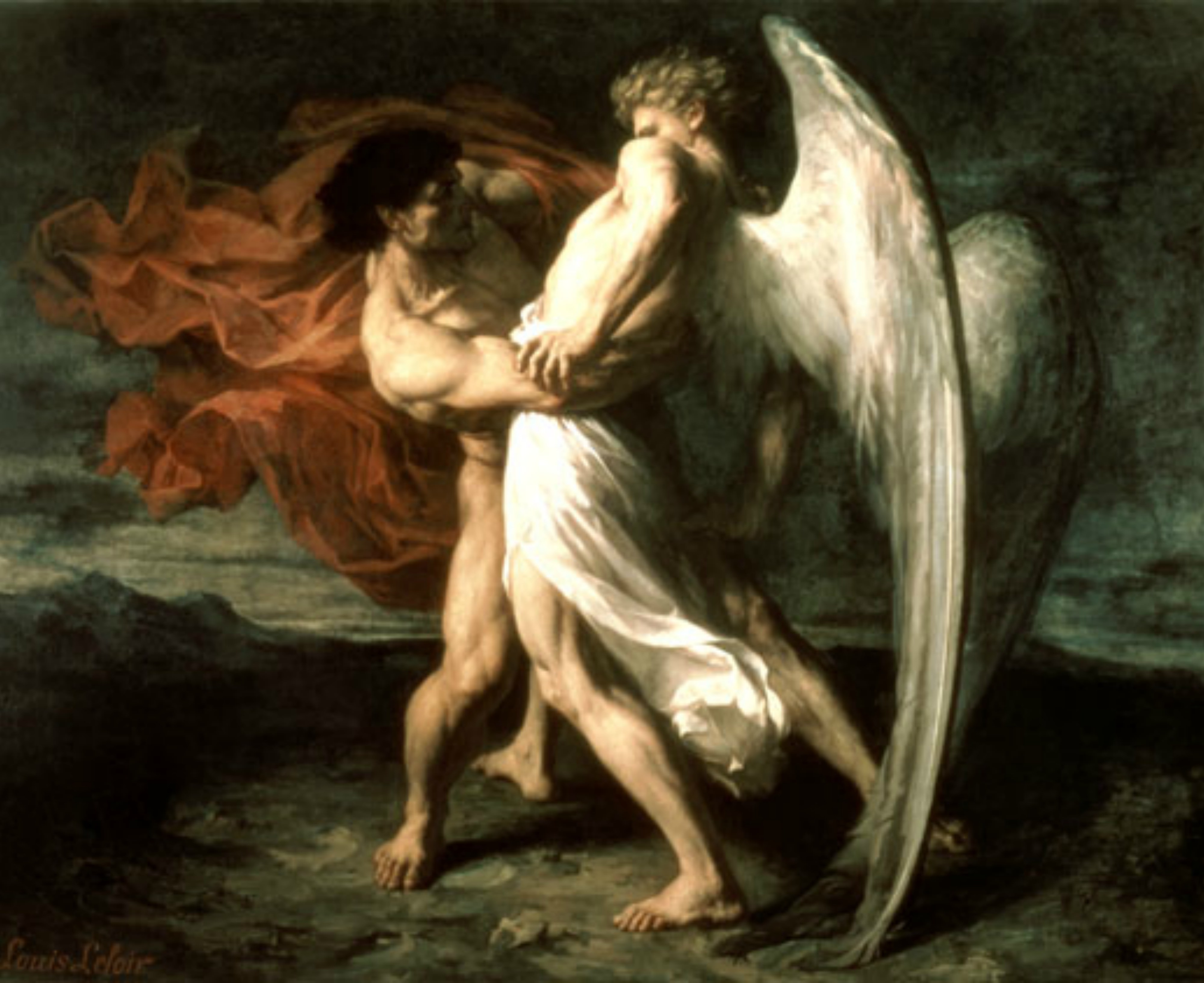
The night before Jacob and Esau meet, Jacob encounters a man and wrestles him till dawn. As dawn approaches, the man touches Jacob's hip and wrenches it out of its socket. Jacob still does not let the man go and demands a blessing. After asking Jacob his name, the man replies with his blessing,
"Your name will no longer be Jacob," the man told him. "From now on you will be called Israel, because you have fought with God and with men and have won."
Jacob wrestled with God! God seems to walk around in human form fairly often (now, before Sodom and Gomorrah were destroyed, in Eden). God in this human form was matched evenly by Jacob (unless God let Jacob win). As we progress through the Old Testament and through the new, we see God becoming more abstract. God is more concrete for authors describing events far in their past. God is more abstract for authors describing events nearer to their present. (Note for those who think God == Jesus, I am referring specifically to God the Father, not Jesus.)

In any case, Esau welcomes Jacob. But Jacob is still wary of Esau. Instead of going with Esau back to Seir (as he was invited to do), Jacob goes to Succoth and finally settles near Shechem. As far as today's text tells us, Jacob snubs his brother and never visits him.

We read a terrible story today about Jacob's time in Shechem. Jacob and Leah's daughter Dinah is raped by Shechem, the local prince. He falls in love with her and wants her for a wife. Shechem's father, Hamor sees this as a good idea; he thinks that arranging more marriages between Jacob's people and his own will facilitate the absorption of Jacob (and his wealth) into the city of Shechem.

Jacob's sons pull a cruel trick on Shechem and Hamor. They say that they will give Dinah if all the men of the city of Shechem are circumcised. Shechem and Hamor  agree, and everyone is circumcised.  Two of Jacob's sons, Simeon and Levi, slaughter all the men in the city while they are still weak. After that, the rest of Jacob's sons take all the women and children as captives and loot the wealth and animals.

Jacob gets angry at his sons,
Afterward Jacob said to Simeon and Levi, "You have ruined me! You've made me stink among all the people of this land -- among all the Canaanites and Perizzites. We are so few that they will join forces and crush us. I wil be ruined, and my entire household will be wiped out!"

"But why should we let him treat our sister like a prostitue?" they retorted angrily.
And that's the end of the story. This is a weak condemnation of an atrocious horror. Without God's command, without the excuse of war, Jacob's sons murdered the men of a city and took their wives. Jacob seems more concerned with his reputation than the moral implications of what his sons did (admittedly, Jacob's concern is valid). Weak condemnation in a situation like this makes claims about the Bible's unambiguously good and moral nature suspect.

New Testament

Another prophecy supposedly fulfilled! Let's look at it in context. Today, Jesus claims that John the Baptist fulfills a prophecy from Malachi 3:1.
Look, I am sending my messenger ahead of you, and he will prepare your way before you.
This one, in context, is more acceptable than usual. However, it does not fit completely. For example, this bit seems out of place:
[The one who follows the messenger] will purify the Levites, refining them like gold and silver, so that they may once again offer acceptable sacrifices to the Lord.
Like in yesterday's reading, Jesus continues to come across as vindictive. In addition to saying that towns that did not repent after he visited them will be worse off than Sodom and Gomorrah, Jesus also prays
Oh Father, Lord of heaven and earth, thank you for hiding these things from those who think themselves wise and clever, and for revealing them to the childlike. Yes, Father, it please you to do it this way.
Now, I imagine this passage gets used for advocating for a childlike faith and the like. In the context of the rest of today's reading, though, what sticks out is that Jesus is thankful that God hides information that could save people from hell.

Psalms and Proverbs

Today we come to a passage many Christians like to quote at atheists.
Only fools say in their hearts,
"There is no God."
They are corrupt, and their actions are evil;
not one of them does good!
Most often, when I have had this passage quoted at me, it has been to "show" how obviously God must be real because only fools deny God's existence. I will interrupt my normal commentary to present a little advice: do not quote this passage at atheists. Doing so will put the conversation on the wrong foot. It is a useless statement. The atheist does not believe in God and does not believe in the Bible. Therefore, quoting what the Bible says about the foolishness of those who do not believe in God will not change an atheist's mind.

Furthermore, realize that if you are a Christian and you quote this passage at an atheist, you are calling the atheist a fool, so do not deny it. You might try to hide behind the excuse that it is God, not you, calling the atheist a fool, but by choosing to quote this passage, you are endorsing its contents.

Also of note, if the first verse of the psalm reflects badly on atheists, the rest does not reflect well on Christians (or anyone else).
The Lord looks down from heaven
on the entire human race;
he looks to see if anyone is truly wise,
if anyone seeks God.

But no, all have turned away;
all have become corrupt.
No one does good,
not a single one!

15 January 2010

Jan 15

Reference links:
Old Testament

Not too much to comment on today. Jacob decides to flee Laban with his wives, children, and possessions. Rachel steals her father's household idols. Laban chases them, but does not harm them because of a warning he received in a dream. Laban searches for his idols. He cannot find them because Rachel claims she cannot get off of her saddle because of her period. Jacob goes on for two paragraphs about how terribly Laban treated him. Laban and Jacob make a covenant to stay out of each others' way.

We then have an odd comment without context,
As Jacob started on his way again, angels of God came to meet him. When Jacob saw them, he exclaimed, "This is God's camp!" So he named the place Mahanaim.
That's it. Angels of God came to meet Jacob and... what? We are left hanging. Were the angels just hanging out?

Jacob has to pass through the region where Esau lives. Remembering that he cheated Esau out of his birthright and blessing, hesends ahead messengers to try to smooth things over. The author gives us a cliffhanger, and we end today's reading seeing after learning that Esau approaches with 400 men.

New Testament

Today we see the less peaceful side of Jesus' teachings. I do not know if I would go so far as to call them violent, but they are certainly antagonistic.

But first, Jesus' views on pluralism. Some Christians believe that there are valid ways of worshiping God other than through Jesus, but that worshiping Jesus is the best and deepest way to connect with God. In this view, some non-Christians may go to heaven. This can come in degrees ranging from "those people are really worshiping Jesus, but just don't know it" to "Jesus is not the only way to get to heaven." I would interpret today's reading from Matthew as being in conflict with the more open pluralistic positions and, perhaps even the weaker ones.
Everyone who acknowledges me publicly here on earth, I will also acknowledge before my Father in heaven. But everyone who denies me here on earth, I will also deny before my Father in heaven.
Certainly, anyone who denies Christ is out of the picture. There is an implication that one must explicitly and publicly acknowledge Jesus to get into heaven. As with most Biblical passages, there is some wiggle room. This statement leaves room for an implied "but those who neither acknowledge nor deny me here on earth, I will neither acknowledge or deny before my Father in heaven".

Now onto the antagonistic passages:
Don't imagine that I came to bring peace to the earth! I came not to bring peace, but a sword.

I have come to set a man against his father, a daughter against her mother, and a daughter-in-law against her mother-in-law. Your enemies will be right in your own household!

If you love your father or mother more than you love me, you are not worthy of being mine; or if you love your son or daughter more than me, you are not worthy of being mine.
I have heard the last segment interpreted as meaning that love that is not mediated through God/Christ is inferior. Thus, it is okay to imply that Jesus should be loved more than family because if you love Jesus more than your family, you love your family more than you would if you didn't love Jesus (follow that?).

Within the context of the passage that interpretation becomes less relevant, if not completely unbelievable. Jesus must be followed and loved above all else or strife will ensue. In context, the last segment seems more like a threat than a loving statement.  To be fully fair, when I have seen this statement used in defense of the interpretation above, it has been of the form "here is this interpretation and here are verses X, Y, and Z which support it" rather than "given this passage and its context, here is how one can interpret it."

Actually, come to think about it, in today's reading, Jesus' tone is generally threatening.

Psalms and Proverbs

Today's psalm continues the patterns of psalms where the author feels abandoned but expresses faith that God will rescue them.
O Lord, how long will you forget me? Forever?
How long will you look the other way?
How long must I struggle with anguish in my soul,
with sorrow in my heart every day?
How long will my enemy have the upper hand?

Turn and answer me, O Lord my God!
Restore the sparkle to my eyes, or I will die
This psalm and the others like it provide comfort to believers because they show faith in the face of doubt, or so I guess. However, I see them more as evidence of the shaky ground that faith stands on. The struggle with doubt is really the main subject of psalms like these. The appeals to God's love and mercy feels tacked on, like the half-hearted fulfillment of a required statement.