05 February 2010

Feb 5

Reference links:
Old Testament

Today we get more rules from God. The nature of the rules strikes me. Moses stands on Mount Sinai talking to God. Supposedly, God uses this time to tell Moses what matters most. Thus, the reading leads the reader to conclude that some of life's most important rules regulate compensation for various crimes involving sheep and oxen. This emphasis makes immense sense for a community of herdsman. It makes less sense if God intended this to be his eternal word, useful for instructing humanity through all the future.

These rules teach an interesting lesson about proportional punishment. The rules distinguish intentional and accidental crimes. They recognize the role of negligence. Punishment varies based on the amount of damage done. For example, a thief who sells or kills an ox or sheep must pay back five oxen or four sheep. If the thief still poses the animal, they pay double the value of the stolen animal (and, presumably, return the stolen animal). These punishments seem to show a recognition of the dual purpose of punishment: deter crime and compensate victims. If the victim's loss is less, the punishment should be less. One might argue that this is unfair, but as a member of a litigious society, I think a little swing in that direction would be beneficial.

Today's reading contains more rules that weaken the apologetic about slavery mentioned yesterday: God's laws about slavery were meant to make things better for slaves than they had been before because banishing slavery was infeasible at that point. Today's point against that argument is that if an ox gores a man or a woman, a boy or a girl to death, it must be put to death. If it had a reputation for goring, the owner must be put to death too unless he redeems his life through payment. However, if a slave was gored to death, the ox is still killed, but the owner of the ox only has to pay the slave owner for his loss.

If a man seduces a virgin he is not engaged to, he has to marry her. If her father does not want to let him marry her, the man still has to pay the virgin bride price. So remember boys, you cannot get around a girl's father's disapproval by seducing her. In fact, I would recommend not trying that approach.

Today's reading also teaches a an important lesson that I know has been ignored by Christians many times throughout the centuries.
Be sure never to charge anyone falsely with evil. Never sentence an innocent or blameless person to death, for I never declare a guilty person to be innocent.
New Testament

Today, Jesus tells the future! He describes the end of the world. We do not know whether or not he was right since, obviously, the world has not ended yet. The end of the world will apparently involve wars, the persecution of the faithful, rampant sin, and the Good News being preached through the whole world. People will flea Judea and many false prophets will preach that they are the Messiah.

Passages like this help explain why some Christians seem almost eager to believe that they are being persecuted. If they are not being persecuted, then the end times are certainly not near. If they are being persecuted, the end times might be near. Death and war and persecution seem like a strange cause for optimism. I am glad it seems to be a small minority of Christians who think about it that way.

We also learn that God would be willing to let everyone die in these end times if it were not for the presence of his chosen ones.
For there will be greater anguish than at any time since the world began. And it will never be so great again. In fact, unless that time of calamity is shorted, not a single person will survive. But it will be shortened for the sake of God's chosen ones.
Remember folks, God is a God of love!

Psalms and Proverbs

In today's reading from Psalms, more oxen!
He makes Lebanon's mountains skip like a calf;
he makes Mount Hermon leap like a young wild ox.
The rest of the psalm is about how God's power is like causes various violent effects such as splitting cedars and lightening strikes.

Proverbs continues with the theme of immoral women and throwing in an implication that women who are "never content to stay at home" are immoral. Also, oxen come up again.
He followed her at once,
like an ox going to the slaughter.
Today's new testament reading is the only one that does not mention oxen!

04 February 2010

Feb 4

Blind guides! You strain your water so you won't accidentally swallow a gnat, but you swallow a camel! - Matthew 23:24

Reference links:
Old Testament

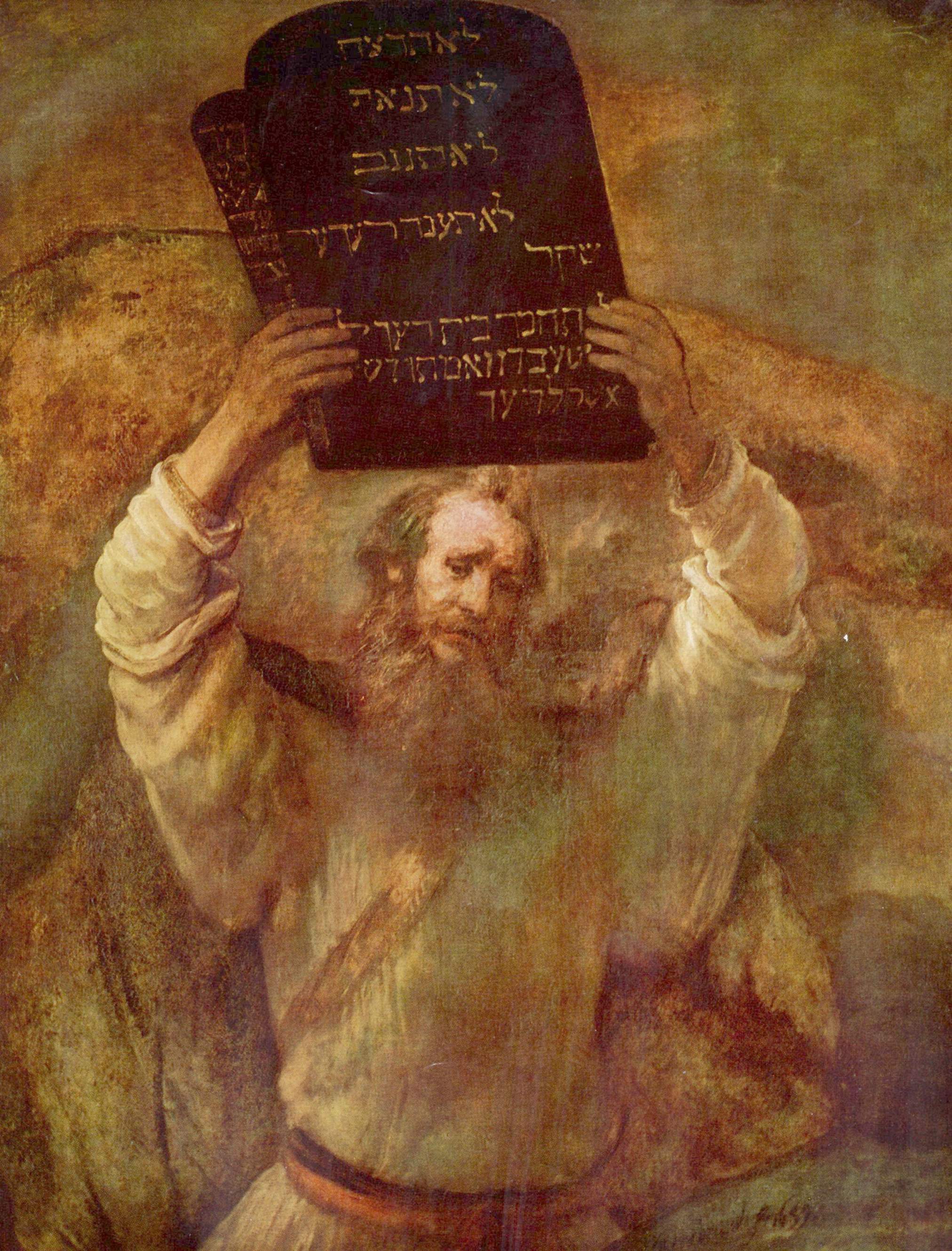
God gives Moses the some commandments. The division of the commandments into ten varies from group to group. Here are the commandments, using the division which makes sense to me (which happens to correspond to the Orthodox division).
  • I am the Lord your God. You must not have any other God but me
  • You must not make for yourself an idol of any kind or an image of anything in the heavens or on the earth or in the sea
  • You must not misuse the name of the Lord your God
  • Remember to observe the Sabbath day by keeping it holy
  • Honor your father and mother
  • You must not murder
  • You must not commit adultery
  • You must not steal
  • You must not falsely testify against your neighbor
  • You must not covet your neighbor's house or wife or anything else of your neighbors
Four of these are irrelevant to non-religious people and the rest seem like common sense. Upon inspection, the ten commandments do not provide the amount of insight you would expect given their cultural importance.

The commentary on the second commandment (by my listing) includes the following:
I lay the sins of the parents upon their children; the entire family is affected—even children in the third and fourth generations of those who reject me. But I lavish unfailing love for a thousand generations on those who love me and obey my commands.
The standard apologetic for this verse claims that sin tends to propagate from generation to generation because of the fallen nature of man. Accepting that apologetic requires ignoring the first two words of the passage. God lays the sins of the parents upon the children, not fallen human nature or whatever else apologists claim.

Another standard apologetic has to do with Biblical attitudes towards slavery. Apologists claim that slavery was a common practice at the time and God's commands regarding slavery served to improve the conditions of slaves. (According to some apologists, the same apologetic supposedly explains Biblical attitudes towards women too, especially in the New Testament.)

Today's reading weakens that apologetic. God gives Moses instructions for the treatment of Hebrew slaves. Even if slavery was an inevitable consequence of warfare between tribes, a good God would forbid the Israelites from enslaving each other.

God tells Moses how people should be punished for mistreating each other. One should be put to death for murder, kidnapping, or striking or dishonoring one's parents. Death for striking or dishonoring one's parents, seems rather extreme.

In contrast, people are not killed for beating their slaves. If the slave dies, they are punished, but not with death. If the slave does not die, they get off free. The assailant owns the slave after all. Going back to the apologetics about slavery, one would think that a good God would treat murder of a slave like murder of anyone else.

New Testament

Jesus rags on the Pharisees some more. Mostly just boring ranting, but there are some entertaining ones, like the one that won the "quote of the day" position.

Psalms and Proverbs
I pray to you, O Lord, my rock.
Do not turn a deaf ear to me.
For if you are silent,
I might as well give up and die.
I was never actually religious enough to find becoming  an atheist painful. However, the passage above seems an apt summary of the feelings of deeply religious people who are losing their belief. Fortunately, people seem to move beyond such feelings of despair and realize that the universe is an even more amazing and fascinating place without some God pulling the strings.

It seems that even the people who named today's section from Proverbs were starting to feel my frustration with the excess concern of the proverbs with immoral women (section titles, like chapter and verse divisions, were not part of the original text). Today's section is titled "Another Warning about Immoral Women". Maybe we can move on to something else soon. Please?

03 February 2010

Feb 3

Can a man scoop a flame into his lap and not have his clothes catch on fire? Proverbs 6:27

Reference links:
New semi-regular feature! Quote of the day. I probably will not have one every day, but when something strikes my fancy, I will stick it up at the top.

Old Testament

The Amalekites attack the Israelites today. Joshua leads the army, and Moses climbs a hill and holds his staff in the air. As long as the staff remains up, the Israelites win. When it goes down, the Amalekites win. Eventually, he gets tired enough that Aaron and Hur have to hold up Moses' arms. I wonder if this was a God approved use of Moses' magic stick (okay, it was blessed, but Moses' magic stick is more fun to say).

Apparently, God really hates the Amalekites for attacking Israel. God tells Moses that he will
erase the memory of Amalek from under heaven.
and Moses, after talking with God said,
They have raised their fist against the Lord's throne, so now the Lord will be at war with Amalek generation after generation.
That seems harsh. How were the Amalekites to know they were attacking God's chosen people? Rumor of God's cruelty in Egypt probably had not yet reached them. From the Amalekites point of view, a mass of a million people was invading their land. No wonder they felt threatened.

Jethro visits to return Moses' wife and sons (apparently, Moses had sent them to Jethro at some point). He gives Moses some advice. Moses had been judging all of the disputes of the 600,000 Israelites by himself (I assume the women did not come to Moses with their problems). Jethro points out that such a solution is unscalable, and advises Moses to assign people to take care of the day to day disputes. There would be separate leaders for groups of 10, 50, 100, and 1000 with Moses at the top.

I wonder if the Biblical author forgot there were (modulo the war with the Amalekites) 600,000 men. The gap between 1000 and 600,000 seems rather large.

Today we read about how the Isrealites left Rephidim and arrived at the wilderness of Sinai, setting up camp at the base of Mount Sinai. This is slightly confusing since yesterday that we read
At the Lord's command, the whole community of Israel left the wilderness of Sin and moved from place to place. Eventually they camped at Rephidim, but there was no water there for the people to drink.
If we grant that the wilderness of Sin and the wilderness of Sinai are different places, the two accounts are consistent in their ordering (Rephidim then Mount Sinai). So are we going through a non-linear narrative (the battle with the Amalekites happened before the water from the rock even though it is placed later in the narrative) or did the Israelites go back to Mount Sinai?

God decides that he will talk to the people from a cloud, but first they have to spend three days consecrating themselves. Not an unreasonable request on God's part.

New Testament

The Pharisees ask Jesus which is the most important of Moses' commandments (don't worry, we'll get there soon). Jesus says the most important ones are

  • Loving God
  • Loving your neighbor as yourself
Additionally, he claims that the rest of the law is based on these two commandments. Not a bad of base assumptions, although I would throw out one of them (guess which one!).

Jesus criticizes the religious teacher some more. I think Jesus would have made a good Fox News commentator.

Psalms and Proverbs

Today's psalm is another that I read as the author willing himself to believe God is there.
Hear me as I pray, O Lord.
Be merciful and answer me!

My heart has heard you say, "Come and talk with me."
And my heart responds, "Lord, I am coming."

Do not turn your back on me.
Do not reject your servant in anger.
You have always been my helper.
Don't leave me now; don't abandon me,
O God of my salvation!
Most people, as near as I can know, occasionally experience the sense that there exists something greater than one's self. However, it seems unnecessary to anthropomorphize that feeling and assume that it is a distinct consciousness.

Proverbs continues to tell us adultery is bad.

02 February 2010

Feb 2

Reference links:

Old Testament

In summary: the Israelites wander through the desert and whine. First, they wander for three days without finding water. They finally find water, but the water tastes bitter. Fortunately, Moses consults God, and God gives Moses a stick to throw in the water that removes the bitterness.


At this place, Marah, God tells the Hebrews
If you will listen carefully to the voice of the Lord your God and do what is right in his sight, obeying his commands and keeping all his decrees, then I will not make you suffer any of the diseases I sent on the Egyptians; for I am the Lord who heals you.
I wonder if this refers to the diseases that were part of the plagues. That would be odd, because none of them other than boils and the deaths could really be described as diseases on people. It could, instead, refer to the diseases the Egyptians came down with generally. Either way, it is kind of an odd interlude.

Next the people go on to Elim,
where they found twelve springs and seventy palm trees.
Remember, when they left Egypt there were 600,000 men plus women and children. Likely over a million people. Each spring had to support 83,000 people. That seems like a lot.

The Israelites complain about not having good food (selectively remembering the meaty stews in Egypt and forgetting the slavery), so God gives them quails and manna from heaven. Manna tasted like honey and looked like flaky frost on the ground. It melts in the sun. Aaron saved some and eventually placed it in the Ark of the Covenant. In this passage, God teaches the Israelites to do no work on the sabbath. Not all the Israelites listened; they tried to gather manna that day. This frustrated God.

After that, the camp moved on to Rephidim.
but there was no water there for the people to drink. So once more the people complained against Moses. "Give us water to drink!" they demanded.

"Quite!" Moses replied. "Why are you complaining against me? And why are you testing the Lord?"
Yup, Moses is that much of a jerk. Here we have a group of over a million people. They have no water. They are marching through the desert. They complain about the lack of water and ask Moses for some. Moses, who has demonstrated his ability to perform miracles time and again. And because they ask for wanter Moses accuses them of testing the Lord. What does he want them to do? Die of thirst? Yes, the Israelites had a serious case of selective memory with respect to life in Egypt, but it sounds like life under Moses was no picnic either.

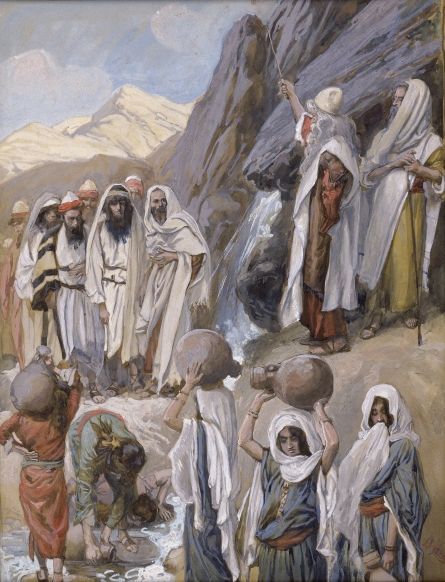
In any case, once the people get to the point where they are ready to stone Moses, he asks God for help, and God tells him to smack a rock. Water come out of the rock. Hurrah!

New Testament

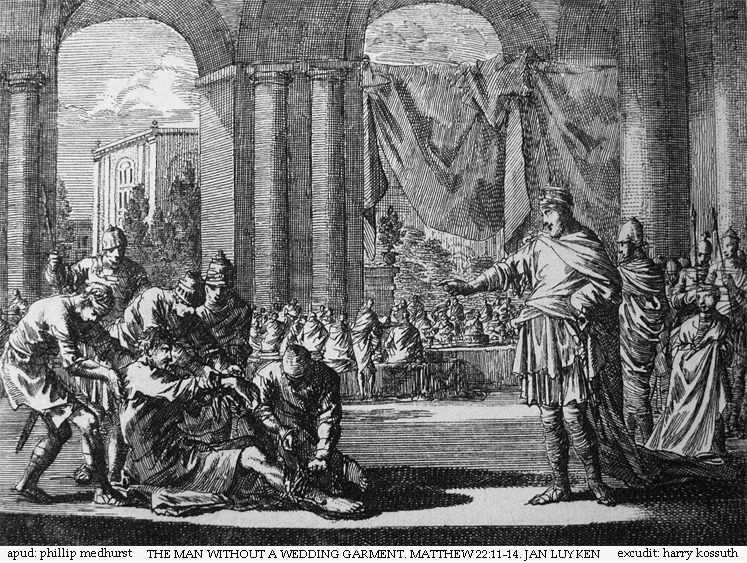
Jesus tells another parable about how the Jews totally are not going to get the rewards God originally intended for them unless they follow Jesus. A king prepares a wedding feast for his son. None of the guests come, so he invites random people. One of the random guests shows up in everyday clothing and the king has him bound and thrown out. Jesus is harsh toward those who do not follow him.

Jesus escapes a trap set by the Pharisees. They ask him about paying taxes. He sees their trap and says that since the coin shows Caesar's face, it is acceptable to give it to him. The Sadducees tried to confound Jesus by asking him about resurrection. They asked about a woman who had been married to each of seven brothers (serially, kind of like Tamar and Judah's sons). The Sadducees asked whose wife she would be in heaven. Jesus replied that people would not be married in heaven. Good to know!

Psalms and Proverbs

Today's psalm has some nice imagery.
At his santuary I will offer sacrifices with shouts of joy,
singing and praising the Lord with music. 
What a great way to praise something! Shouts of joy, singing and music! What fun!

Proverbs tells us to obey our parents. In particular, listening to our parents will keep us away from immoral women. I think the proverbs have something of an obsession with immoral women.

01 February 2010

Feb 1

Reference links:

Old Testament

God detours the people of Israel to the Red Sea. He has been leading them with a pillar of cloud in the day and a pillar of fire in the night.  The Israelites are on their way with the Egyptian treasure. Now that things are going well, God makes trouble again. He says,
Order the Israelites to turn back and camp by Pi-hahiroth between Migdol and the sea. Camp there along the share, across from Baal-aephon. Then Pharaoh will think, "The Israelites are confused. They are trapped in the wilderness!" And once again I will harden Pharaoh's heart, and he will chase after you. I have planned this in order to display my glory through Pharaoh and his whole army. After this, the Egyptians will know that I am the Lord.
Pharaoh and his army pursue the Israelites, but, once again, the blame actually belongs to God. When Pharaoh's army approaches the camp of the Hebrews, Moses parts Red Sea.
the Lord opened up a path through the water with a strong east wind. The wind blew all that night, turning the seabed into dry land. So the people of Israel walked through the middle of the sea on dry ground, with walls of water on each side!
I like the juxtaposition of a naturalistic explanation (God created the path with a strong east wind) with the miraculous (the walls of water on either side).

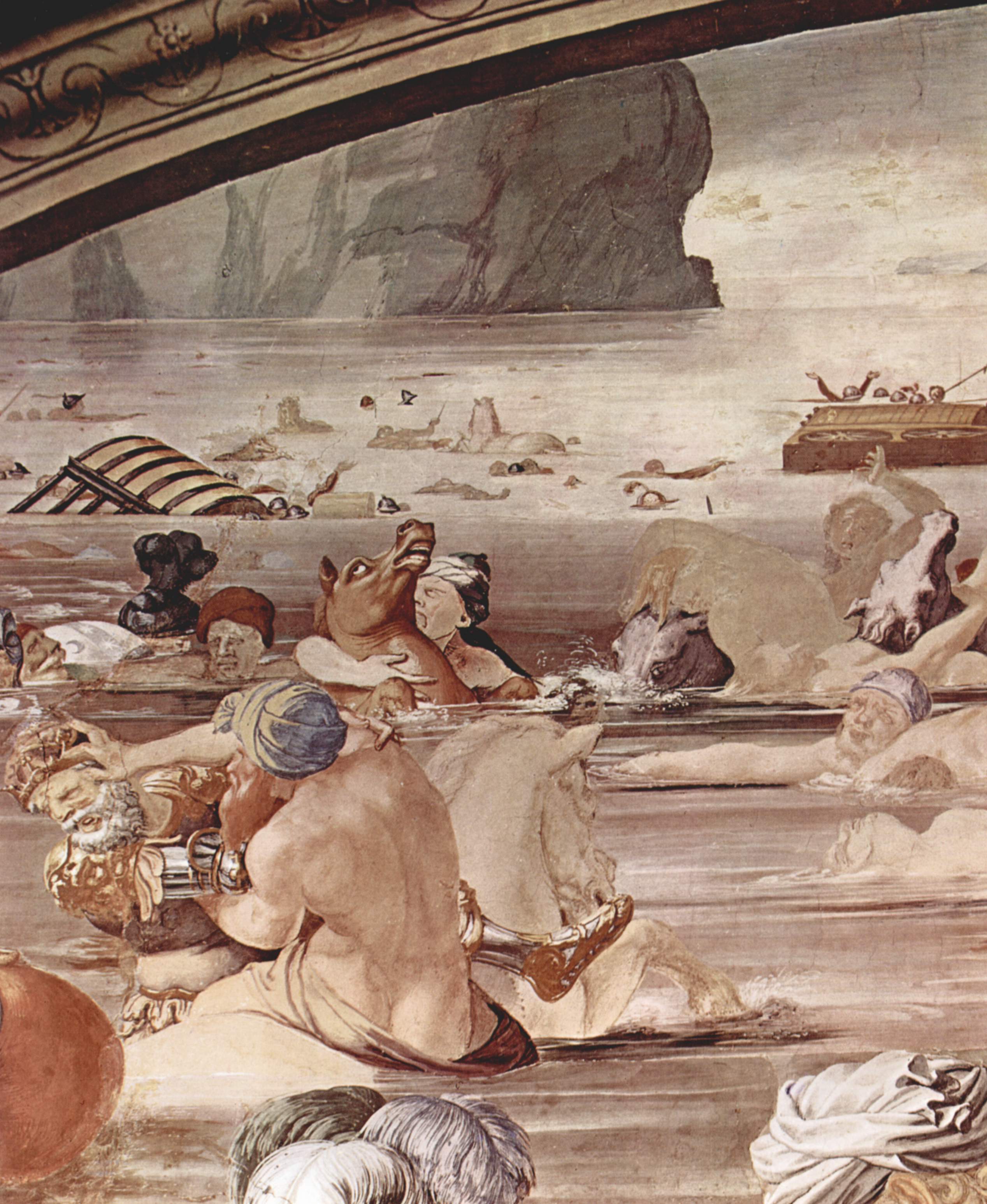
Of course, Pharaoh and his men ride into the sea, Moses raised his hand, and the waters rushed back into place. God killed more people just so that he could show his power.

The rest of today's reading consists of a song of deliverance that includes the line
Who is like you among the gods, O Lord
On the one hand, this line comes from poetry and so should not necessarily be taken literally. On the other hand, it implies that God was seen by the Hebrews as the greatest God among many.

New Testament

Today's reading focuses on the strained relationship between Jesus and the Jewish priests and elders. First, the priests and elders challenge Jesus' authority. Next, Jesus tells a story that implies that God will reward people they look down upon before he rewards them. Third, Jesus compares the Jewish priests and elders to a bunch of evil farmers who kill the servants and even the son of the rightful owner of the farm. Hmm, I wonder what that is a thinly veiled reference to...

The author of Matthew really goes out of his way to imply that the Jewish teachers lack the sense to see the obvious truth of Jesus' divinity. One would expect that the most traditional and powerful members of the Jewish community would resist the teachings of an interloper, especially when those teachings imply that their teachings are wrong. On the other hand, it seems telling that the most educated members of society were the ones that Jesus could not convince.

Psalms and Proverbs

Today's psalm, in short: God, I have been so devoted, please do not let me suffer. Same old, same old.

From Proverbs,
There are six things the Lord hates --
no, seven things he detests:
haughty eyes,
a lying tongue,
hands that kill the innocent,
a heart that plots evil,
feet that race to do wrong,
a false witness who pours out lies,
a person who sows discord in a family.
The first two lines amuse me.