24 January 2010

Jan 24

Reference links:
Old Testament

The patriarchs do not like normal, straight forward blessings. In today's reading, Jacob blesses Joseph's sons Manasseh and Ephraim, adopting them as his own children. When he goes to bless the children, he intentionally puts his right hand on the head of Ephraim, the younger son, and his left hand on the head of Manasseh, the older son. Joseph tries to correct his father, but Jacob insists on giving Manasseh the greater blessing.

After completing that blessing, Jacob calls all his sons together and gives them a final blessing and makes prophecies about their future. Jacob outlines the destiny of the tribe of Israel descended from each son, showing how the traits of the tribes derive from the traits of the sons who found them. Knowing that the author of Genesis composed the book long after the time these events occurred, it seems more likely that the traits of the brothers are being filled in from the personalities of the tribes.

Jacob finishes blessing his sons, makes it clear that he wants to be buried in the cave where Abraham and Sara, Isaac and Rebekah lie. Then he dies.

New Testament
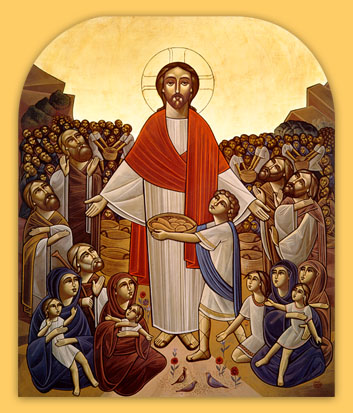

Today, Jesus heals more people and then feeds 4000 more men (plus women and children). This time he used seven loaves and a few fish. He may have shared fish as well as bread, the text is ambiguous. The two stories share many similarities. In both cases, Jesus has been healing people, he discusses the issue of food with the disciples, they possess a small amount of food, Jesus blesses the food, and the food is shared among thousands of people (with leftovers). The redundancy itself does not show that this is the same legend told twice. Jesus may very well have needed to feed crowds multiple times.

The redundancy shows little. However, the disciples reaction the second time surprises me. Despite the fact that Jesus had already fed 5000 with five loaves and two fish, the disciples ask,
Where would we get enough food here in the wilderness for such a huge crowd?
Do they not remember what happened before? Did they think it was some sort of trick and Jesus did not actually perform a miracle? Or maybe, just maybe, one story grew into two slightly different legends, and the author of Matthew decided to include both.

Jesus gets annoyed at the Pharisees and Sadducees for wanting a miraculous sign to prove his authority. On the one hand, you have to have sympathy for Jesus' annoyance; he has been performing miracles left and right (well, if the accounts of his own followers are to be believed). On the other hand, Jesus claims authority from God. You bet that I would demand some pretty good evidence before believing that of anyone. Of course, some would say that is why I am destined for hell.

Psalms and Proverbs

The psalms fascinate me. They contain so many verses that are familiar in a context that is completely unfamiliar.
In times of trouble, may the Lord answer your cry.
May the name of the God of Jacob keep you safe from all harm.

May he send you help from his santuary
and strengthen you from Jerusalem.

May he remember all your gifts
and look favorably on your burnt offerings

I believe I have seen the first before two lines quoted reasonably often, probably on greeting cards or something. But we never hear the rest about Jerusalem and burnt offerings. There is nothing wrong with those verses, but like much of the Bible, they just are no longer relevant outside of their historical context.

Some decent advice in todays Proverbs reading.
Guard your heart above all else,
for it determines the course of your life.
Avoid all perverse talk;
stay away from corrupt speech.

Look straight ahead,
and fix your eyes on what lies before you.
Mark out a straight path for your feed;
stay on the safe path.
Don't get sidetracked;
keep your feed from following evil.
I do believe that what we hear and say influences us and what we say reflects our true beliefs. A single event may not mean much (there have even been jokes making fun of women that I have laughed at). However, when we hear or say "perverse" things regularly, I believe they do influence on what we believe in our hearts.

I also agree that most of us could benefit from more focus in our lives. Not to keep us from evil, I do not agree with the Biblical view that evil lurks around every corner. But we need focus to keep from getting distracted from our goals.

That said, you can also take such focus too far. If you never take a glance to the side, if you never take a risk or try another path, you may lose out on life changing opportunities.

23 January 2010

Jan 23

Reference links:
Old Testament


Jacob and his family go to Egypt. God talks to Jacob again, saying
I will go with you down to Egypt
All the English translations on Bible Gateway share the sense that God is going with the Jacob to Egypt. If you are on the lookout for indications that the Biblical God started out as a tribal God who morphed into a universal God overtime, this passage sticks out. I would expect a universal God to say "I will be with you in Egypt", not "I will go with you down to Egypt".

Another long genealogy. We learn that two of Benjamin's sons were Muppim and Huppim. I wonder if kids then made fun of siblings with rhyming names like they would today. Also, the text seems to make a big deal out of the fact that Jacob's family numbered 70 in Egypt, so, for the record, Jacob, his sons, and their children came to 70 people.

The famine continues, and food becomes more scare. I was wrong a few days ago when I  believed that Joseph was giving grain to the people of Egypt and selling it to people from foreign lands. Today we learn that Joseph had been selling the grain to both the people of Egypt and the people of Canaan.
By selling grain to the people, Joseph eventually collected all the money in Egypt and Canaan, and he put the money is Pharaoh's treasury.
Once the people had no more money, they give Joseph their livestock, and he eventually makes them Pharaoh's slaves.
So Joseph bought all the land of Egypt for Pharaoh. All the Egyptians sold him their fields because the famine was so severe, and soon all the land belonged to Pharaoh. As for the people, he made them all slaves, from one end of Egypt to the other. The only land he did not buy was the land belonging to the priests.
However, we also learn that the slavery was really more like serfdom. Joseph would provide them with grain to plant and eat and they would provide 1/5 of their crop back to Pharaoh. Still not a great thing for Joseph to do, but better than what modern minds assume when they hear the world "slavery".

Joseph's family is doing just fine. They acquire property and grow in numbers. I guess it helps to be the family of the man who is second only to Pharaoh. Jacob is still living, and we learn that he will live to be 147 years old and die in Egypt. Getting closer to 120, but still not there yet. Jacob makes Joseph promise to bury Jacob in the land of Canaan with his ancestors.

New Testament

The Pharisees ask Jesus why his disciples do not participate in the tradition of ceremonial hand washing before eating. Jesus starts going on about inner purity verses outer purity. However, what is not made clear is whether or not Jesus' disciples wash their hands at all before eating. I sure hope so.

Good hygiene aside, we have another supposed fulfilled prophecy. Jesus claims that the hypocrisy of the Pharisees fulfilled a prophecy from Isaiah:
These people honor me with their lips,
but their hearts are far from me.

Their worship is a farce,
for they teach man-made ideas as commands from God.
This fulfilled prophecy fares better than most, but still does not do great. In context (Isaiah 29:13), the statement is part of an actual prophecy. However, fulfilling this prophecy fails to impress. It is too general. You could say that it applied to some modern Christian denominations and be just as close (which group you think it should be applied to will, of course, depend on which group you are a part of).

Today a Gentile woman asks Jesus for help. They have the following exchange.
Jesus said to the woman, "I was sent only to help God's lost sheep -- the people of Israel."

But she came and worshiped him, pleading again, "Lord, help me!"

Jesus responded, "It isn't right to take food from the children and throw it to the dogs."

She replied, "That's true, Lord, but even dogs are allowed to eat the scraps that fall beneath their masters' table."

"Dear woman," Jesus said to her, "your faith is great. Your request is granted. And her daughter was instantly healed.
What is going on here? Does Jesus really believe that he has been sent to only help Jews? Was the Roman officer he helped in Matthew 8 a Jew? Did Jesus change his mind on helping non-Jews because of this woman? If so, what are the theological consequences of God incarnate changing his mind? Was Jesus testing the woman's faith, planning on healing her daughter the whole time? This passage is very confusing.

Psalms and Proverbs
The heavens proclaim the glory of God.
The skies display his craftsmanship.

Day after day they continue to speak;
night after night they make him known.

They speak without a sound or word;
their voice is never heard.
The skies certainly put one in touch with the numinous, and this is something we can all experience. I cannot fault who conclude from this feeling of the transcendent that there must exist some sort of being greater than ourselves. However, not everyone has those feelings, and those feelings are certainly not sufficient to help one conclude which, if any, of the versions of God is the true one.

Here are a couple of passages from today's psalm that will seem quite hilarious once we get to Leviticus.
The commands of the Lord are clear,
giving insight for living.
and
The laws of the Lord are true;
each one is fair.
Today's reading from Proverbs implies that the world that can be divided into the "righteous" and  the "wicked". You are, of course, supposed to avoid doing as the wicked do.
For evil people can't sleep until they've done their evil deed for the day.
They can't rest until they've caused someone to stumble.
The proverbs certainly seem to reinforce the belief held by some modern Christians that anyone who is not a Christian is evil and is actively working against Christianity (which is synonymous with good).

22 January 2010

Jan 22

Reference links:
Old Testament

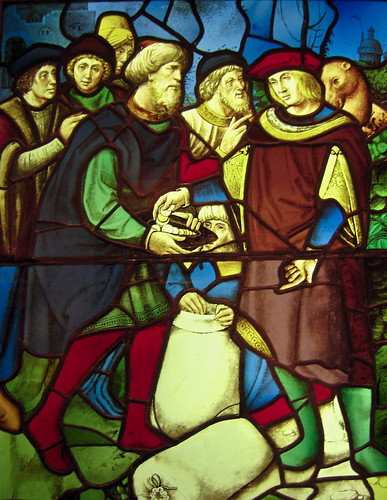
Joseph seems to want to mess with his brothers' minds. Yesterday, he gave them a great feast. Today, he sends them back home without revealing his identity. Instead, he once again puts the brothers' money back in their sacks. Additionally, he has his silver cup added to Benjamin's sack. After the brothers have left, he sends his palace manager after them to accuse them of stealing the cup. They return to Joseph's palace, believing Joseph will make Benjamin his slave. Joseph spends awhile berating them. Eventually, Judah makes an impassioned plea asking that he be made a slave instead of Benjamin. At this, Joseph finally gives in to his emotions and reveals himself to his brothers. They are amazed.

Now, at this point, everyone seems happy, and Joseph invites his whole family to come live with him in Egypt. I wonder if Joseph's brothers were really as happy about the whole situation as they seemed to be. Joseph acted like a jerk toward them when they came to Egypt. They are starving and now know that the famine is predicted to last five more years. Furthermore, they see that Joseph is in a position of great prosperity and power. I think that no matter how big of a jerk he had been, they would have no choice but to pretend to be happy.

Also, today's text has another odd redundancy. Joseph invites his family to come live in Egypt with him. A few passages later, Pharaoh also extends the invitation. The text makes it seem like Pharaoh extended this independently of Joseph's. Not a glaring redundancy like some of the other ones we have seen, but it was enough to make me pause while reading.

New Testament

Jesus feeds 5000 men plus an unspecified number of women and children with five loaves of bread and two fish. Actually, contrary to common belief, he only feeds them the bread.
Then he told the people to sit down on the grass. Jesus took the five loaves and two fish, looked up toward heaven, and blessed them. Then, breaking the loaves into pieces, he gave the bread to the disciples, who distributed it to the people.
Maybe cooking the fish was too much effort? Maybe Jesus wanted the fish all for himself?

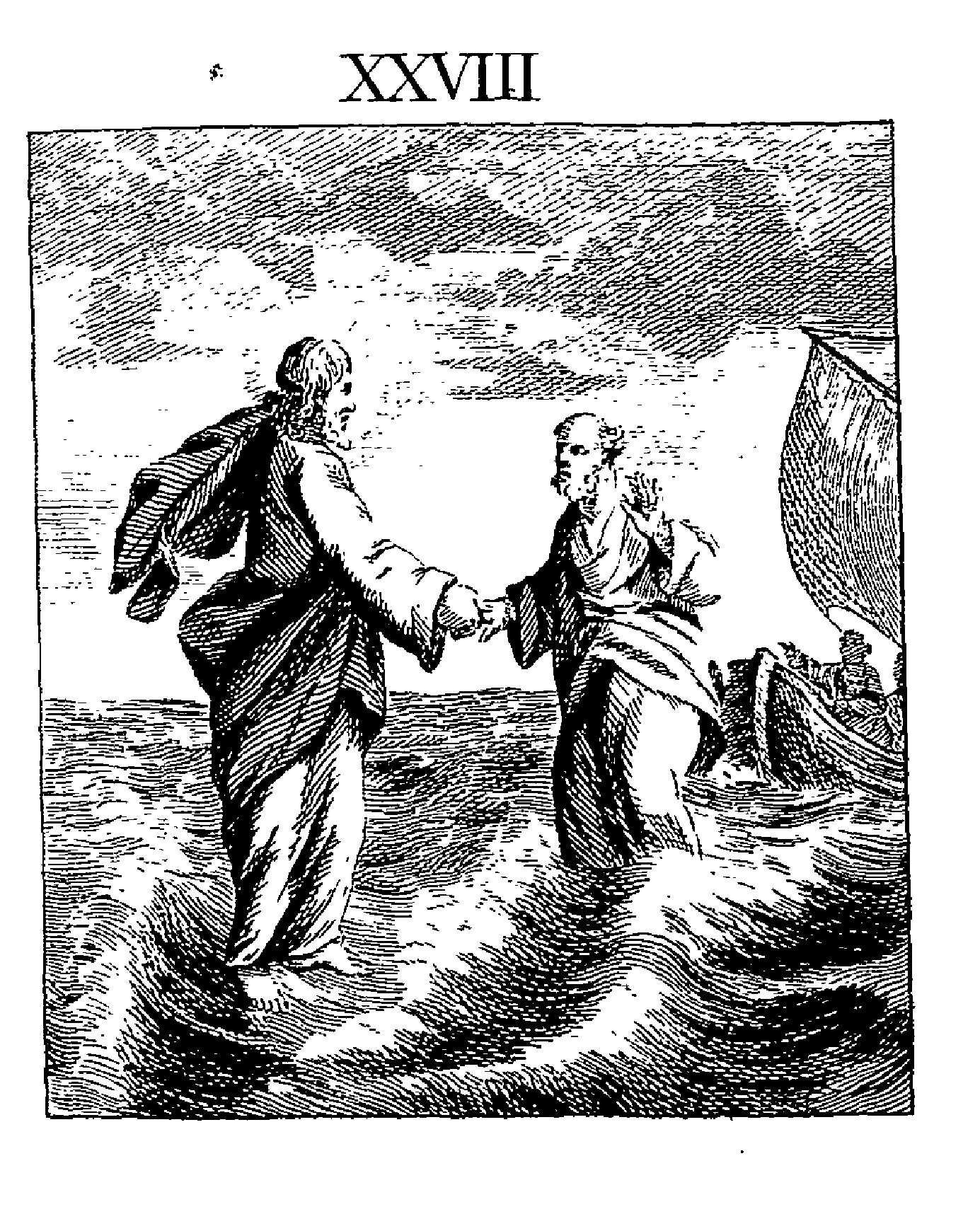
Today must be miracle day in the readings because the night after distributing the bread, Jesus sends his disciples off in a boat while he prays. A storm comes up and he comes to the disciples walking, as we all know, on the water. He calls Peter to him and Peter comes until he gets scared and starts sinking.

I feel like I ought to have something skeptical to say about these miracles. However, I do not really mind the accounts of miracles performed by Jesus. I do not think the accounts are true, but I am willing to concede that if the Bible were a reliable source of information, I would be willing to give it the benefit of the doubt to claims that an individual performed miracles.

Instead, the skeptical side of me comes up when I read the passages that show that the Bible is not a reliable source of information. And such passages abound. The Bible makes incorrect claims about the world and our scientific knowledge (an olive tree could form leaves shortly after being deeply submerged, the earth was created before the sun). The Bible makes claims that are unlikely or that fail to be internally consistent (Noah was able to gather all the world's creatures into an ark, the long life spans before the flood, inconsistent versions of the same event, two creation stories). These passages show that the Bible is not a good source of information, and that is why I reject the descriptions of Jesus' miracles, not because of an a priori assumption that the miraculous occurrences are impossible.

Psalms and Proverbs

Today's psalm is about how David destroyed his enemies. Good for him? David does provide us with a couple of good lines.
I ground them as fine as dust in the wind.
I swept them into the gutter like dirt.
It is not such a great sentiment, but it is a great description of complete destruction where the conqueror feels nothing but disdain for the conquered. Today's reading from the psalms also has a couple of lines that I am guessing certain vindictive types of Christians find great joy in:
He is the God who pays back those who harm me;
he subdues the nations under me.
There are certainly those who give more weight to this vengeful, violent God than to the idea that God is Love.   Of course, they have something going for them. So far the vengeful God seems to have more Biblical support than a God of love (but a tribal God of limited power seems to have the most Biblical support of all).

21 January 2010

Jan 21

Reference links:
Old Testament

Having imprisoned his brothers for three days, Joseph releases them on the condition that they return with Benjamin and leave behind Simeon. Joseph sells the brothers grain and they leave for home, minus Simeon. Without their knowledge, he has their payment for the grain returned to their sacks. As far as I can figure, Joseph does this just to mess with his brothers' heads. Any better ideas?

Some textual analysis. Scholars currently believe that Genesis came from multiple sources, although there is disagreement as to the nature of those sources.  Sometimes the different texts are stitched together well enough that a reader reading a translation and not paying super close attention will not notice the seams. In today's reading, we see a seam.

The text has two versions of how Joseph's brothers discover that he returned their money to them. The first version has them find it on their way home:
When they stopped for the night and one of them opened his sack to get grain  for his donkey, he found his money in the top of his sack. "Look!" he exclaimed to his brothers. "My money has been returned; it's here in my sack!" Then their hearts sank. Trembling, they said to each other, "What had God done to us?"
The second version has them find it after they return home and have told their father what happened in Egypt:
As they emptied out their sacks, there in each man's sack was the bag of money he had paid for the grain! The brothers and their father were terrified when they saw the bags of money.
It is possible that after one brother found the money in the first sack, the rest of the brothers did not bother to look in their own sack. Thus, when they found even more returned money, they were even more terrified. But that does not seem plausible. Furthermore, the brothers had been telling their father about the trip just before the second discovery. They did not mention their first discovery at the time. Assuming that these are just two inconsistent tellings of the same discovery provides a simpler explanation.

In any case, upon seeing the money, Jacob assumes Simeon must remain a prisoner forever. He refuses to let them take Benjamin back to Egypt. But the famine continues and eventually the men have to go to Egypt again to avoid starvation. They bring Benjamin, goods of the land, and twice the money they paid before (so they can return that which had been returned to them).

Joseph calls the brothers to his own home. They fear that
he will seize [them], make [them] slaves, and take [their] donkeys
I found this statement hilarious. They will be seized, made slaves, and have their donkeys taken. I personally would not bother worrying about the donkeys at that point.

Instead, Joseph prepares a feast for him. But he has not yet revealed himself.

New Testament

One more parable in today's reading: the Kingdom of Heaven is like a fishing net. After pulling up the net full of different fish, the good fish are kept and the bad fish discarded. Once again, this parable supports a view that whether or not one will be saved depends on some unchangeable essence of your self. An individual does not have any influence on the outcome.


In today's reading, Jesus returns to his hometown of Nazareth. He taught and performed miracles in the synagogue. The people were amazed, but then scoffed saying,
He's just the carpenter's son, and we know Mary, his mother, and his brothers -- James, Joseph, Simon, and Judas. All his sisters live right here among us. Where did he learn all these things? And they were deeply offended and refused to believe in him.
In response, Jesus says
"A prophet is honored everywhere except in his own hometown and among his own family. "
Jesus makes a good point that often those who know you best who make the worst judgments. They tend to overstate your accomplishments or fail to give them the weight they are due. We also learn  that Jesus had brothers and sisters. This seems like something of a sticking point for the Catholic belief that Mary always remained a virgin. (Do Catholics still believe that?)

Today's reading describes the death of John the Baptist. Herod Antipas, the son of Herod the Great, had him killed. Herod Antipas and his wife, Herodias, rather disliked John because he said their marriage is invalid, but Herod did not want to kill John because he feared the response of the people. One night, he promises his daughter anything she wants after she performed a particularly pleasing dance at a party. Her mother persuades her to ask for John the Baptist's head on a platter. Not wanting to go back on his promise, Herod gives in and has John beheaded and his head delivered. Eww.

Psalms and Proverbs

Today's psalm is a continuation of yesterday's. It will be continued tomorrow. Something about these lines captures my imagination:
He reached down from heaven and rescued me;
he drew me out of deep waters.
As for the rest, the psalmist says more of the same old same old: he has been faithful to God and that is why God is faithful to him.

In today's proverbs reading, like in yesterday's reading, we read more about the importance of getting wisdom. I got it. Can we move on to actual wisdom now?

20 January 2010

Jan 20

Reference links:
Old Testament

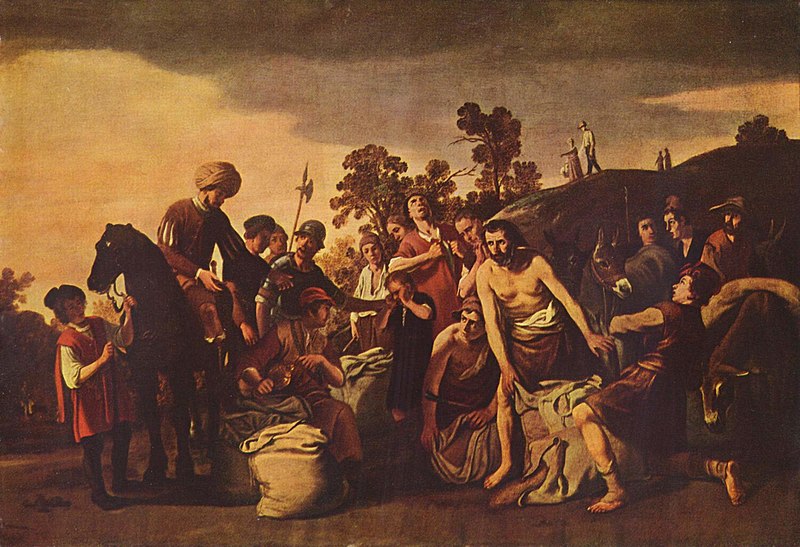
Yesterday, Pharaoh dreamed of seven healthy cows being eaten by seven sickly cows and seven full heads of wheat being consumed by seven scrawny one. Not surprisingly, Joseph interprets these dreams. Joseph tells Pharaoh that the dreams mean that Egypt will have seven years of prosperity followed by seven years of famine. Joseph tells Pharaoh he should find someone to manage the collection of food during the years of prosperity. Again not surprisingly, Pharaoh decides that Joseph fits the bill perfectly. Apparently, being able to interpret dreams qualifies you for managing a kingdom.

Pharaoh makes Joseph second only to himself, and Joseph takes care of collecting grain in the good years. In the meantime, he lives a pretty good life. Amongst other things, Pharaoh gives Joseph a wife, Asenath daughter of Potiphera. Just in case you are confused, Potiphera is not the same person as Potiphar, Pharaoh's captain of the guard and Joseph's former employer.

As predicted, seven years of plenty are followed by seven years of famine. Fortunately for the people of Egypt, Joseph opens the storehouse to give grain to the Egyptians and sell it to people from surrounding countries. Here we get a interesting bit of perspective. The author of Genesis says,
And people from all around came to Egypt to buy grain from Joseph because the famine was severe around the world.
Like with the idea of a world wide flood (Genesis 7) or the idea that the devil could  take Jesus to a high mountain and see all the kingdoms of the world (Matthew 4), this passage shows that the Biblical authors did not have a very good idea of the size of the earth and all of the kingdoms it contained.

The famine reaches Joseph's family. Jacob sends his sons to Egypt to get grain. Joseph recognizes his brothers, but they do not recognize them. He accuses them of being spies and forces them to bring back Benjamin, the youngest brother and the only one who had not gone on the trip. Joseph throws them in prison for three days. And then, another cliff hanger!

I do have to say that I like this part of Genesis because it reads like a story. Much more interesting than many parts of the Bible.

New Testament

Today is the day of parables in the new testament.

Parable of the wheat and weeds: A farmer plants seeds. In the night, an enemy plants weeds with the seeds. The farmers say the weeds should stay until harvest time. When they have grown up, they will be harvested. The weeds will be burned and the wheat stored away.

According to Jesus, he is the farmer, the good seeds are the people who will go to heaven. The enemy is the devil, the bad seeds are those who will go to hell. One lesson to take from this is that those who are not going to heaven are bad from the outset. A weed is always a weed and has no chance to grow into wheat.

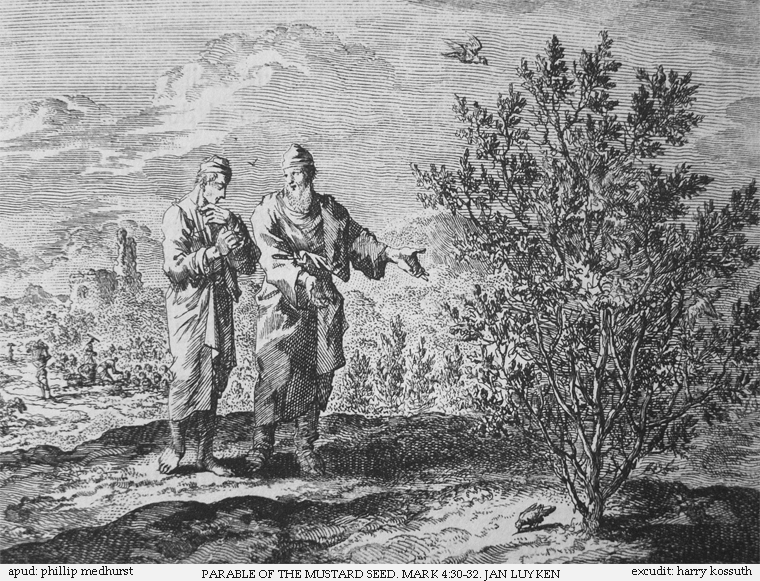
    Parable of the mustard seed: The Kingdom of Heaven is like a mustard seed. A mustard seed is smaller than other seeds. It grows into a plant large enough for birds to build nests in. How can we interpret this? At a individual level, it could mean that a little bit of faith will grow into great rewards in heaven. Or maybe it is meant to be taken on an institutional level. The small religion Jesus was "planting" would grow into a large one.
      Parable of the yeast: It only takes a little yeast to permeate bread.  This seems to yield similar interpretations to the mustard seed.

          Parables of the hidden treasure and the pearl: A dude finds a treasure in a field and sells everything he owns to buy the field. A merchant is searching for pearls and finds one of great value and so sells everything he buys to get it. We learn that it is worth giving up all you have for something of greater value.  The implication here is that the ultimate reward is Heaven. However, the difference between the Kingdom of Heaven and a perfect pearl or a hidden treasure is that you can evaluate the worth of the latter two to see whether or not they are worth the sacrifice. You cannot even verify that the Kingdom of Heaven is real.
            By telling all of these parables, Jesus supposedly fulfills the prophecy
            I will speak to you in parables.
            I will explain things hidden since the creation of the world.
            Two problems with this supposed fulfilled prophecy. First, it is from a psalm (psalms are not prophecies). In context:
            O my people, listen to my instructions.
            Open your ears to what I am saying,
            for I will speak to you in a parable.
            I will teach you hidden lessons from our past—
            stories we have heard and known,
            stories our ancestors handed down to us.
            Granting that "hidden lessons from our past" is kind of like "things hidden since the creation of the world", the psalm still implies that the the parables will be new lessons from old, well known stories. I have never heard that the parables Jesus tells in the new testament are based on traditional stories.

            The second problem is that if Jesus was going to go to the effort to explain "things hidden since the creation of the world", he could have included some more impressive things. Some indication of the deep truths of astronomy or physics or biology perhaps. We do not need a text book, but something would have been nice.

            Psalms and Proverbs

            Today's psalm has a very anthropomorphic description of God. I will give it an easier time here than I would elsewhere since the psalms are poetry, but it is still interesting. Imagine the following verses to be read in a big, dramatic voice.
            Smoke poured from his nostrils;
            fierce flames leaped from his mouth.
            Glowing coals blazed forth from him.

            He opened the heavens and came down;
            dark storm clouds were beneath his feet.

            Mounted on a mighty angelic being, he flew,
            souring on the wings of the wind.

            He shrouded himself in darkness,
            veiling his approach with dark rain clouds.

            Thick clouds shielded the brightness around him
            and rained down hail and burning coals.

            The Lord thundered form heaven;
            the voice of the Most High resounded
            amid the hail and burning coals.

            He shot his arrows and scattered his enemies;
            his lightening flashed and they were greatly confused.
            I  will also note that this is the same psalm that also contains the fairly well quoted verse, "The LORD is my rock, and my fortress, and my deliverer; my God, my strength, in whom I will trust; my buckler, and the horn of my salvation, and my high tower" (KJV). Funny how that part is quoted buy the part about shooting arrows and smoking nostrils is left out.